The Beauty Industry Compliance Credential
One credential, two tracks: for the brand-side teams who develop products and commission content, and the content creators and influencers who publish it.
A regulatory claim travels down the marketing chain: from the product development team that formulates and selects the claim, to the marketer who writes the brief, to the content creator or influencer who publishes it, to the consumer who acts on it.
Compliance is a team sport.
What BICC Is
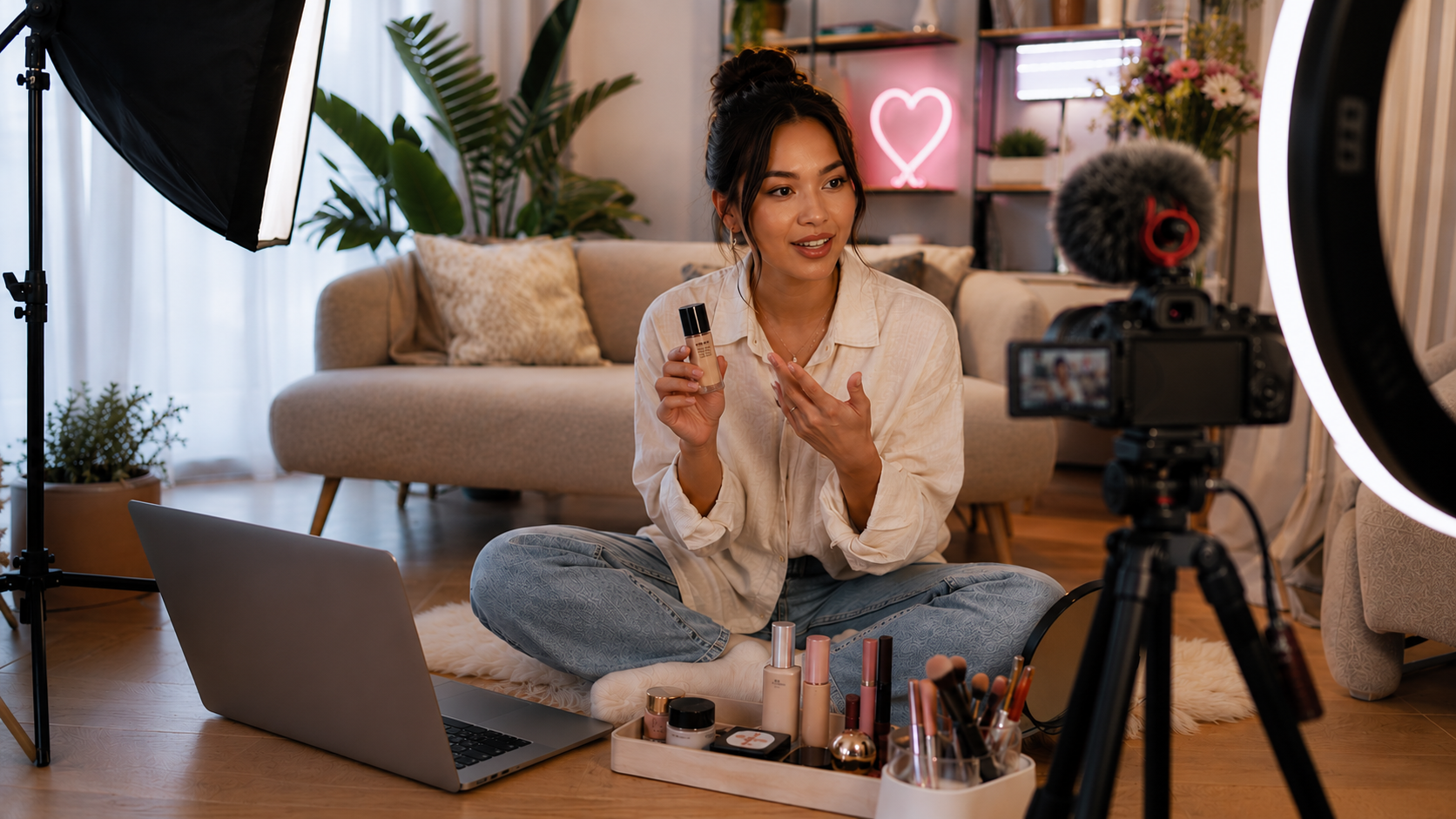
BICC is a structured credential covering the federal and platform rules that govern beauty marketing, from FDA cosmetic and drug classification to FTC endorsement disclosure, MoCRA registration, and the brand-brief process that determines whether content stays inside or outside what a product can legally claim. Every participant completes a shared regulatory core, then a role track matched to their seat in the marketing chain: the Content Creator track, for evaluating and responding to brand briefs, or the Brand track, for marketing and product development teams, covering how claims get selected and substantiated upstream and how briefs get written, so they never ask a content creator to make a claim the product can't support.
Who BICC Is For
Brand operators, marketing leads, PD teams, and compliance teams. The Brand track trains your own team: how briefs get written, where claims must route through regulatory or legal review, and how documentation and approval workflows hold up when an FDA inquiry, FTC investigation, or class action discovery request lands. Training your content creators and your teams, and being able to show it, is what reasonable care looks like in practice. Claims risk doesn't start at the brief. It starts at formulation and claim selection, which is why the Brand track is built for product development teams as much as marketers.
Beauty content creators and influencers. A verifiable credential that signals to brands you understand the rules, and a practical framework you carry into every piece of content going forward.
Influencer agencies and roster managers. A way to credential your roster at scale, differentiate your representation, and reduce contract risk across your portfolio.
What BICC Covers
FDA cosmetic and drug classification: what makes a product a cosmetic, when language pushes a product into drug territory, and why the line matters.
FTC endorsement and disclosure rules: material connections, the 2023 Endorsement Guides, what "clear and conspicuous" actually requires, and where most influencer content fails.
MoCRA registration and ingredient safety: what changed, what brands and content creators now need to know, and how it shows up in compliant content.
Beauty enforcement history and current sweeps: real warning letters, real consent orders, real settlements, and the patterns that produce them.
Social platform policy: where Instagram, TikTok, and YouTube rules diverge from federal law, and how to navigate both.
Content Creator track: reading and responding to brand briefs, and applied practice. Decoding what a brief actually authorizes, recognizing where improvisation creates risk, pushing back constructively, and a content self-assessment framework.
Brand track: writing compliant briefs, and documentation and governance. Commissioning content that stays inside what the product can legally claim, routing claims to regulatory and legal review rather than authoring them, and the recordkeeping and approval workflows that demonstrate reasonable care.
How the Credential Works
BICC is independently developed and reviewed by subject-matter experts in beauty regulatory affairs and cosmetic chemistry. Participants enroll by role, complete the shared core plus their track and an applied assessment, and earn a verifiable credential, listable on LinkedIn, in media kits, in agency rosters, and in brand vendor-selection documentation. The credential is the practical artifact. The deeper output is a working framework for evaluating any beauty claim, in a brief or in a post, against the rules that actually apply.
The Waiting List
BICC opens for enrollment after pre-launch. Ahead of that, I’m building a waiting list for the people who want to hear first when enrollment opens, with the pricing and dates.
There is nothing to pay and nothing to commit to. Your name tells me there is demand for training built for the marketing chain, and it is the case I take to fund production.
Prefer email? Email me at insights@prettyequity.com, subject line "BICC waiting list."
About
The Beauty Industry Compliance Credential (BICC) is a Pretty Equity program.
Pretty Equity is the advisory and publishing platform led by Melory Johnson, a beauty industry leader with 26+ years across product development, regulatory compliance, manufacturing, and commercialization, with more than a decade of medical and regulatory writing alongside it.